
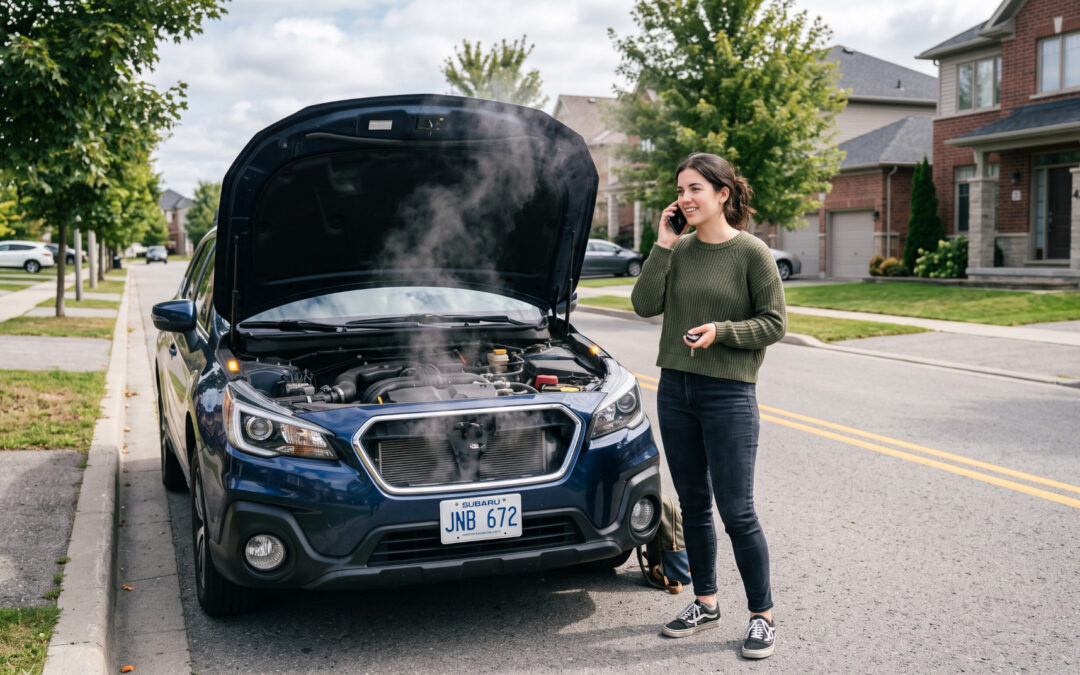
Extended car warranty insurance is best understood as a service contract, not insurance in the classic sense: you pay a premium, and in exchange, the provider agrees to pay for specific mechanical or electrical failures that happen unexpectedly, rather than compensating you for an insured event like theft or an accident. It picks up roughly where your manufacturer’s warranty leaves off, once your factory cover expires, whether that’s after three years or considerably longer depending on the brand. Not every vehicle qualifies, not every part is covered, and whether it’s actually worth it depends heavily on the specific car you’re driving and how long you plan to keep it.
What You Will Learn From This Article
- How extended warranty insurance actually works, mechanically, when something breaks
- How old, and how high-mileage, your car can be and still qualify
- Which vehicles genuinely don’t qualify, based on a real South African insurer’s own policy terms
- What parts are actually covered, and which common exclusions catch people out
- Whether extended warranty insurance is worth it, or whether replacing the car makes more financial sense
How Extended Warranty Insurance Actually Works
The mechanism is straightforward once you see it laid out. You pay a monthly or annual premium to a warranty provider, either your car’s manufacturer, your bank, a dealer, or an independent company. If a covered component fails unexpectedly during your policy period, you take the car to an approved repairer, the provider assesses the fault, and pays for the repair, in many cases settling directly with the repairer rather than reimbursing you afterwards. What it does not do is cover routine maintenance, service items, or damage from an accident, that’s what a service plan and your car insurance policy are for respectively. Extended warranty exists specifically for the scenario in between: a genuine, unexpected mechanical or electrical breakdown outside of a crash and outside of scheduled servicing.
How Old Can Your Car Be?
Most South African insurance providers cap eligibility somewhere between 15 years old and 250,000 to 300,000km, though the exact figures vary by company, and it’s worth checking the specific limit for any provider you’re considering rather than assuming a single industry standard. Some products are specifically built to extend an existing, still-valid manufacturer warranty seamlessly, Budget Insurance’s own Auto Plan, for example, is available for cars under three years old with less than 120,000km, effectively adding cover onto a warranty that hasn’t lapsed yet. A separate category of product, often called a pre-owned warranty, is built specifically for cars whose factory warranty has already ended, and these tend to allow for an older, higher-mileage vehicle, up to that 15-year, 250,000 to 300,000km range, provided the car has a complete, verifiable service history.
Which Vehicles Don’t Qualify
This is worth knowing before you assume any car is eligible. Reviewing an actual South African extended warranty policy document shows a specific, real exclusion list: taxis, rental vehicles, exotic vehicles, rebuilt vehicles carrying a Code 3 salvage status, modified vehicles, and any vehicle used in motorsport or competition are all excluded from cover under that policy. Code 3 vehicles, cars previously written off for structural damage and rebuilt, are a particularly important exclusion to know about if you’re buying second-hand, since that status is permanent on the vehicle’s record and can rule out extended warranty cover entirely, regardless of how well the rebuild was done. Grey import vehicles, brought into South Africa outside the manufacturer’s official local distribution channel, also commonly face limited or harder-to-find warranty options, since providers can’t always guarantee the same parts and service network support that applies to officially imported vehicles.
What Parts Are Actually Covered
Extended warranty cover typically focuses on major mechanical and electrical systems: the engine internals, gearbox and transmission, drivetrain, and core electrical components, with the specific list of covered parts varying by provider and plan, some published policies list around 45 individual components. What’s consistently excluded is just as important to understand. Wear-and-tear items, brake pads, clutch plates, tyres, and similar consumables, are not covered, since they’re expected to degrade with normal use regardless of any mechanical fault. A real South African policy document specifically excludes oil leaks and related damage, along with hoses, pipes, auxiliary belts, fan blades, and CV boots, items that wear out in the ordinary course of driving rather than failing unexpectedly. Any fault the provider determines existed before your policy started is also excluded, which is exactly why a full, verifiable service history matters so much when you apply.
Is It Transferable If You Sell the Car?
Some extended warranties can be transferred to a new owner if you sell the car, but not automatically, and not universally across every provider. Where transfer is allowed, it typically requires written notice to the provider, including the new owner’s details, and remains subject to their approval, it isn’t a given right just because the vehicle changes hands. It’s worth confirming this specifically with your provider before you sell, since a transferable warranty can be a genuine selling point for a buyer, while a non-transferable one simply ends when you do.
Extended Warranty or Just Buy Another Car?
This is the harder, more personal question, and there isn’t a single right answer, but there is a reasonable way to think it through. Extended warranty insurance is generally the financially sensible choice when your current car has a genuinely good reliability reputation for its make and model, a full and complete service history, and you’d be happy to keep driving it for several more years if a major repair bill weren’t a concern. In that scenario, a warranty premium is a small, predictable cost protecting against a specific, expensive risk, engine or gearbox failure, for example, that’s considerably cheaper than financing a replacement vehicle, which comes with its own new costs: a higher monthly repayment, a higher insurance premium on a more valuable car, and the reality that a new car loses a meaningful share of its value in the first few years regardless of how well you look after it.
Buying a different car starts to make more sense once a vehicle has already had multiple, unrelated problems, is approaching or past the age and mileage ceiling most warranty providers apply, or comes from a make and model with a genuinely poor reliability record, since in those cases you’re likely to be paying for warranty cover while also absorbing a steady stream of wear-and-tear costs a warranty was never going to cover in the first place. It’s also worth being honest about the car itself: if you don’t actually want to keep driving it for the next several years, no warranty changes that, and putting that money toward a car you’d rather own may be the better use of it regardless of the maths.
Frequently Asked Questions
How does extended car warranty insurance actually work?
You pay a premium to a warranty provider, and if a covered mechanical or electrical component fails unexpectedly during your policy period, the provider pays for the repair, often settling directly with an approved repairer, rather than reimbursing you for routine maintenance or accident damage.
How old can my car be and still qualify for extended warranty cover?
Most South African providers cap eligibility somewhere between 15 years old and 250,000 to 300,000km, though this varies by company, and a complete, verifiable service history is generally required.
Which vehicles don’t qualify for extended warranty insurance?
A real South African policy document specifically excludes taxis, rental vehicles, exotic vehicles, rebuilt Code 3 vehicles, modified vehicles, and vehicles used in motorsport. Grey import vehicles also commonly face limited options.
What’s typically not covered by extended warranty insurance?
Wear-and-tear items like brake pads, clutch plates, and tyres are excluded, along with oil leaks, hoses, belts, fan blades, and CV boots, plus any fault the provider determines existed before the policy started.
Is it better to buy extended warranty insurance or just replace the car?
It depends on the car. Extended warranty tends to make more sense for a reliable model with a full service history that you’re happy to keep driving. Replacing the car makes more sense once it’s had repeated problems, is near the provider’s age or mileage limit, or you genuinely don’t want to keep it regardless of the cost comparison.