
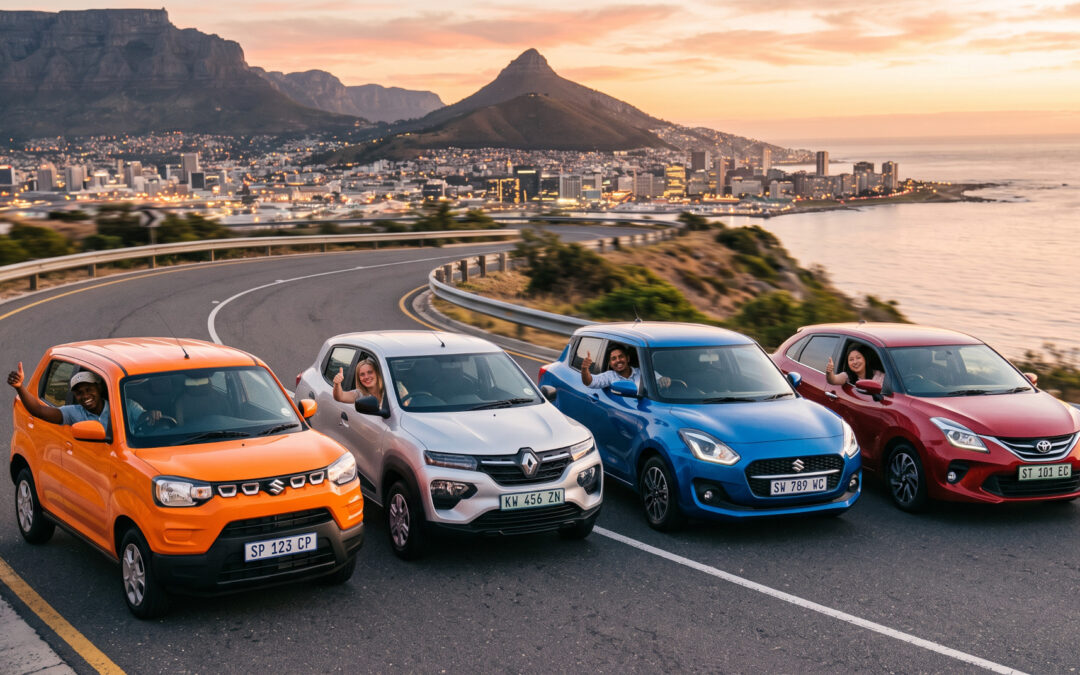
If keeping your premium down matters as much as the car itself, the segment you shop in does more work than almost any single feature you could add. Budget and economy cars consistently carry the lowest car insurance premiums in South Africa, and it’s not a coincidence or a marketing claim, it’s a direct result of how insurers measure risk. But cheap to buy doesn’t automatically mean cheapest to insure. One of South Africa’s most popular budget cars is also one of its most hijacked, which is exactly the kind of detail worth knowing before you assume the smallest car on the lot is the cheapest one to cover.
What You Will Learn From This Article
- The real, risk-based reasons budget and economy cars price lower to insure
- Why popularity can quietly work against a budget car’s low premium
- Which budget models insurers and comparison sites commonly point to, and why
- What to actually check before assuming a cheap car means a cheap premium
Why Small Cars Cost Less to Insure, By Design
Insurers price a policy against the likely cost and likely frequency of a claim, and budget cars score better than almost any other segment on both counts. Smaller engines mean lower performance, which translates directly into lower-severity accidents on average, since there’s simply less kinetic energy involved when something goes wrong. Industry guidance from Budget Insurance is direct about this: “vehicles with smaller engines generally attract lower insurance costs, as they are seen as less risky to insure.”
Parts and repair costs matter just as much as the accident itself. High-volume, locally relevant models benefit from deep parts availability and fast turnaround, which keeps claims cheaper and shorter to resolve. The Volkswagen Polo Vivo is a clear example: it’s built locally at Volkswagen’s Kariega plant in the Eastern Cape, which keeps panel and parts costs down for exactly the kind of fender-bender and smash-and-grab damage that makes up most claims in this segment. Toyota’s and Suzuki’s extensive South African dealer and parts networks do the same thing for the Starlet and Swift. Add to that a now-standard safety spec, dual airbags, ABS with electronic brake-force distribution, and in many cases electronic stability control, even at the budget end of the market, and the combination of a lower retail value, cheaper repairs, and better crash protection is exactly why this segment prices lowest across the industry.
The Catch: Popularity Can Work Against You
Here’s the nuance that a simple “buy small, pay less” rule misses. The same qualities that make a budget car cheap to insure, being common, sharing parts widely, and being easy to find, also make certain models genuinely attractive to organised vehicle crime. King Price‘s 2026 national hijacking report lists the Volkswagen Polo Vivo as the second most hijacked vehicle in South Africa, and the Hyundai Grand i10 at fifth, right alongside bakkies like the Toyota Hilux and Ford Ranger that top the list for entirely different reasons. The report is specific about why: “vehicles sharing parts across multiple models are easier to strip and sell through informal channels,” and common cars “blend into traffic, making them harder for police to identify after a hijacking.”
This doesn’t cancel out the Polo Vivo’s underlying affordability, its low engine size, cheap local parts, and solid safety kit still work in its favour, but it does mean the theft and hijacking risk component of the premium pulls in the opposite direction. We’ve covered this specific tension in detail in our Polo Vivo insurance guide, and the full national picture, including where budget models rank against bakkies and family SUVs, is in our highest-risk vehicles in South Africa guide. The practical takeaway is simple: check a model’s theft ranking before assuming its segment alone guarantees the lowest premium.
Which Budget Models Typically Price Lowest, and Why
South African insurers and comparison sites consistently point to a similar shortlist when discussing affordable-to-insure cars, and the reasoning behind each is worth understanding rather than just the name. Pineapple’s own published guidance highlights the Suzuki S-Presso and Renault Kwid specifically for their low starting retail prices, which keeps the sum insured, and therefore the premium baseline, low from the outset. Budget Insurance separately highlights the Suzuki Swift and Toyota Starlet, citing each brand’s strong South African parts and service footprint as the main reason repairs stay cheap and fast. The Volkswagen Polo Vivo appears on both insurers‘ lists for its local manufacturing, though as covered above, it’s also the clearest example in this segment of the theft-risk exception worth checking before you buy.
What to Actually Compare Before Buying for a Low Premium
- Engine size and power. Smaller, lower-powered engines consistently price lower across every insurer.
- Local manufacturing and parts network. A model built or widely serviced in South Africa will almost always repair cheaper and faster than an equivalent import.
- Standard safety features. Dual airbags, ABS with EBD, and stability control reduce claims severity and insurers price accordingly.
- Theft and hijacking ranking. Check where the specific model sits on current national crime statistics before assuming segment alone decides the premium.
- Telematics or usage-based options. Several insurers offer genuine discounts for tracked, lower-risk driving, worth asking about regardless of which budget model you choose.
Frequently Asked Questions
Why are budget cars cheaper to insure in South Africa?
Smaller engines mean lower-severity accidents on average, locally built or widely serviced models have cheaper and faster repairs, and budget cars typically have a lower retail value, all of which reduce an insurer’s expected claims cost.
Is the cheapest car to buy always the cheapest to insure?
Not always. Popularity and parts-sharing can make certain budget models genuine hijacking targets. The Volkswagen Polo Vivo, for example, is one of South Africa’s cheapest cars to insure on paper but also ranks second on King Price’s 2026 national hijacking list.
Which budget cars are commonly cited as cheapest to insure in South Africa?
Insurers and comparison sites commonly point to the Suzuki S-Presso, Renault Kwid, Suzuki Swift, Toyota Starlet, and Volkswagen Polo Vivo, generally citing low retail price, small engines, and strong local parts networks as the reasons.
Does a budget car’s safety rating actually affect the premium?
Yes. Features like dual airbags, ABS with electronic brake-force distribution, and stability control reduce the severity of claims, and insurers price that reduced risk into the premium.
Should I check a car’s theft risk before buying it for insurance savings?
Yes. A model’s popularity can cut both ways: it keeps parts and repairs cheap, but it can also make the car a more attractive target for organised vehicle theft, which works against the very savings you’re shopping for.